
You have 30 days to start watching and 48 hours to finish once you start.
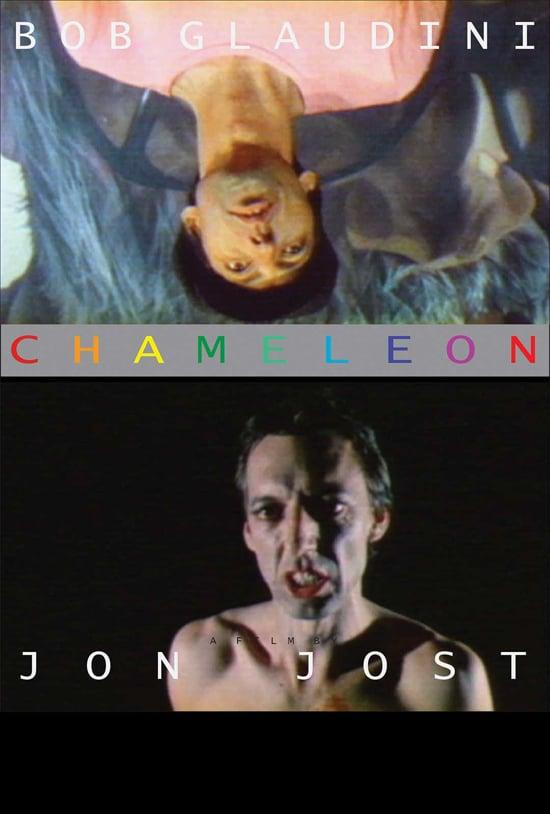
A scathing portrait of the Hollywood/LA arts milieu of the late 70’s, Chameleon follows the amorphous day of its lead character, an Armani-jacketed peddler of high-class dope, fraudulent art, and preening postures suited-to-fit the changing victims, though as with all such fakery, the real victim in the long run is the person who lives such a life. Critics comments: Jost's Chameleon cost a mere $35,000 to make (including the 16 to 35mm blowup) and is a triumph of artistry over budget. Jost's day in the life of a lean, mean Los Angeles hustler (Bob Glaudini) is a cautionary tale about the self-destructiveness of American opportunism. The main character - hero or villain, according to taste - moves reptilelike through a land of easy-prey gullibility, sucking dry his victims and his own humanity alike. The film is packed with bold visual metaphors. When a gun is fired, the whole screen explodes into white; when the hustler changes his "act" for different clients, the screen, chameleonlike, changes its colors. Chameleon is a nervy, intelligent, exciting advance on Jost's last film, Angel City. Nigel Andrews, American Film, 1979 ...but I also like the film because Bob Glaudini's performance as Terry is absolutely riveting (why this man isn't better known I'll never understand) ; because Jost seems to have captured, more or less exactly, the kind of California life-style that makes a convention of the unconventional, and because Jost's inventiveness, undoubtedly born out of necessity, has an irrepressible edge to it that stops pretension in its tracks. In a way he is the American Wenders, equally attracted to but critical of Hollywood prototypes. Derek Malcolm, Guardian Jon Jost's Chameleon was probably the happiest instance of a mixed marriage at the Festival (Edinburgh 1979): combining a freak, trippy (in fact almost Corman-esque) saga of a dope-dealer and all-round hustler with an abstract distillation of patterns of color and light. The place of the latter in the film is both somewhere within the drug-laced nimbus of its title character, Terry (Bob Glaudini), and somewhere outside its ironic description of the rampant merchandising of all other human activities. In a way, this abstract element almost serves as a secondary narrative, or at least becomes the "point" of the film. At the beginning, Terry is seen hustling a painter of just such abstract designs to come up with six imitations of another painter which he can unload on the art market. With some "persuasion", Terry overcomes the painter's reluctance, and at the end of the film returns to collect his merchandise. But the rolls of paper his is given turn out to be blank, and the painter defiantly protests, "My life is color, form, the shape of things..." before Terry knocks him down and leaves him lying in a pool of spilled colors that returns us to the abstracts which were shown in detail in the opening shots. It is probably not too deterministic a reading to see Jost as the painter and the blank sheets as the conventional movie which he has refused to provide for audience consumption. But in between, his narrative not only holds together but unfolds through a fascinating succession of moods as Terry drives about LA, moving from appointment to appointment, from role to role. At one point, at the end of a long sequence in which he seems to be renewing a personal acquaintance on a hilltop some way outside the city, he and his companion go into a brief song and dance (I want to be phony, I want to be fake, not real:). The unreality of Los Angeles clearly serves as a prime cause, and natural cradle, for the dreaming of cocaine dreams, and through it Jost even makes contact with a literary source.. Terry refers to science-fiction writer Philip K. Dick and comments, "This feller seemed like a casualty straight from his pages." Richard Combs, American Film